
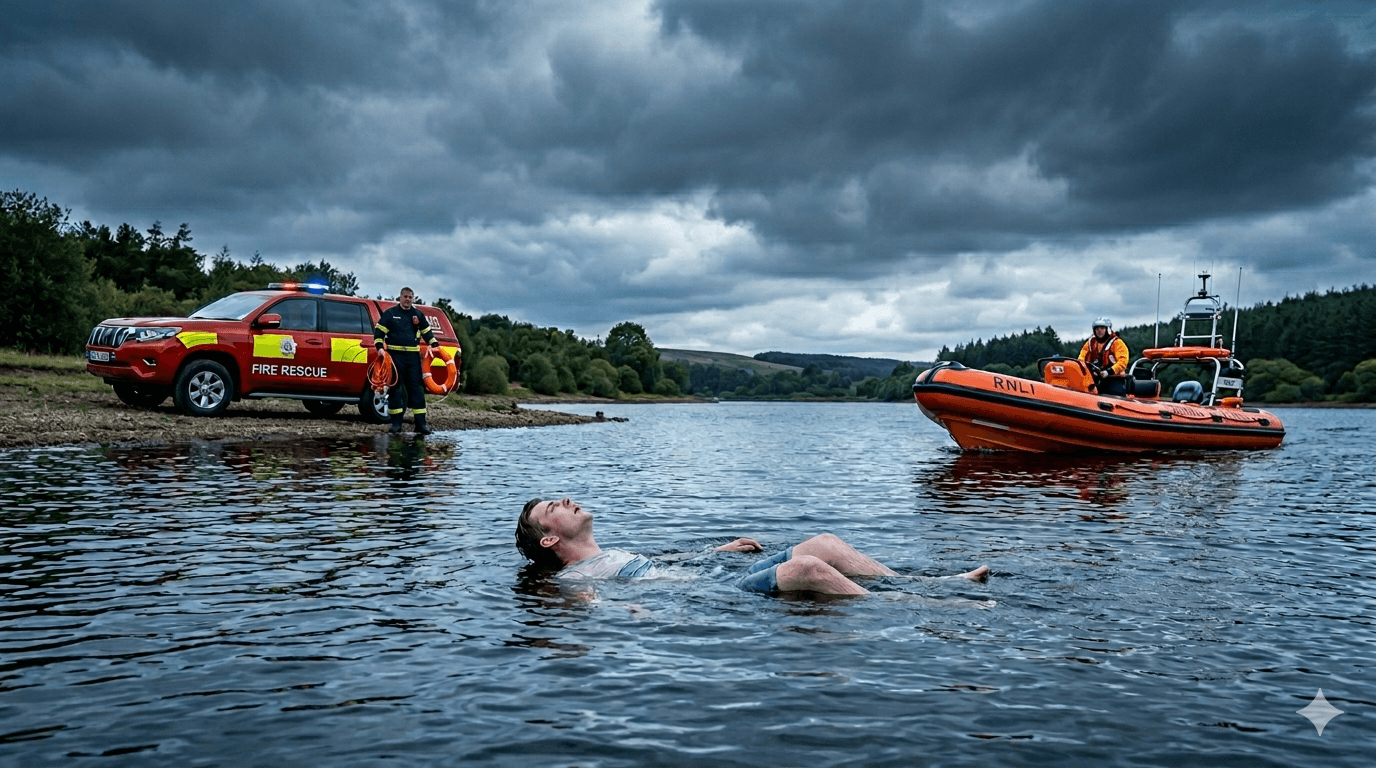
The sun is shining, temperatures are rising, and the temptation to cool off in the nearest lake, river, or ocean is entirely natural. But behind the idyllic scenes of summer lies a devastating reality that makes open water safety an absolute priority right now.
In just the last seven days, 12 people have lost their lives in open water incidents across the UK.
Here at Adventure Safe, our core mission is to help you explore the great outdoors and embrace the thrill of adventure. But we want you to come home safely at the end of the day. These recent tragedies are a sobering reminder that open water can be incredibly unforgiving, regardless of how strong a swimmer you are in a heated pool.
If you think this is a rare occurrence, the statistics tell a different story. According to the latest data from the National Water Safety Forum (NWSF), there are over 600 water-related fatalities in the UK each year. Shockingly, around 250 of these are accidental drownings—and over 60% of them happen at inland waterways like rivers, lakes, flooded quarries, and reservoirs.
To help keep you and your family safe this summer, we are amplifying the urgent, life-saving advice from the RNLI and the Fire and Rescue Service. Please read this, remember it, and share it.
The Hidden Danger: Cold Water Shock
The biggest misconception about UK waters is that a hot day means warm water. Even when the air temperature pushes past 30°C, the water in our seas, reservoirs, and deep rivers rarely exceeds 15°C.
Plunging into cold water triggers a physical reaction known as Cold Water Shock. It causes you to gasp uncontrollably, hyperventilate, and panic. Your blood vessels narrow, forcing your heart to work harder, which can lead to cardiac arrest even in young, healthy people. Within minutes, you lose the ability to move your arms and legs effectively.
Crucially, almost half of all people who accidentally drown in the UK never intended to enter the water in the first place. They were simply out for a run or a walk and slipped, tripped, or fell in and unfortunately didn’t understand open water safety. This is where the RNLI’s crucial advice comes in.
The RNLI’s Golden Rule: Float to Live
If you find yourself in trouble in the water, your instinct will be to thrash around and swim hard. You must fight this instinct. The RNLI’s “Float to Live“ campaign has saved countless lives. If you fall in or get into difficulty, follow these steps:
- Tilt your head back: Submerge your ears and keep your mouth and nose clear.
- Relax and breathe: Try to control your breathing. The initial shock will pass in about a minute.
- Move your hands: Gently scull with your hands to help you stay afloat.
- Don’t worry about your legs: Everyone floats differently; if your legs sink, that’s perfectly normal.
- Call for help: Once your breathing is under control, shout for help or swim to safety if you have the energy.
The Fire Service Warning: Keep Your Feet on the Ground
While the RNLI does phenomenal work on our coasts, the Fire and Rescue Service handles the majority of inland water rescues—navigating those rivers, lakes, and quarries where the majority of accidental drownings occur.
Quarries and reservoirs are particularly lethal. They feature steep, slippery drops, hidden submerged machinery, and freezing depths that never see the sun.
The Fire Service frequently responds to secondary drownings—when a well-meaning bystander jumps in to save a friend, child, or dog, and quickly becomes a victim themselves. If you see someone in trouble in the water, the Fire Service urges you to follow the Call, Tell, Throw protocol:
- CALL: Dial 999 immediately.
- If you are inland (river, lake, quarry), ask for the Fire and Rescue Service.
- If you are on the coast, ask for the Coastguard.
- TELL: Shout to the person in the water to Float to Live. Tell them to get on their back and control their breathing.
- THROW: Look for rescue equipment like a life ring or throwline. If there isn’t one, throw them anything that floats—a football, a cool box, or an empty plastic bottle. Never enter the water to rescue them. (Note: Dogs usually make it out on their own; tragically, owners who go in after them often do not).
Adventure Safely
We don’t share this to stop you from enjoying the water. Wild swimming, paddleboarding, and kayaking are incredible ways to experience the UK’s natural beauty. But they require respect, preparation, and knowledge around open water safety.
If you’re heading out this weekend:
- Go to a lifeguarded beach or a supervised open water swimming venue.
- Wear a buoyancy aid if you are on a paddleboard or kayak.
- Acclimatise to the water slowly—never jump straight in.
- Never swim alone.
12 lives lost in a single week is 12 too many. Let’s respect the water, look out for one another, and make sure our next adventure is a safe one.